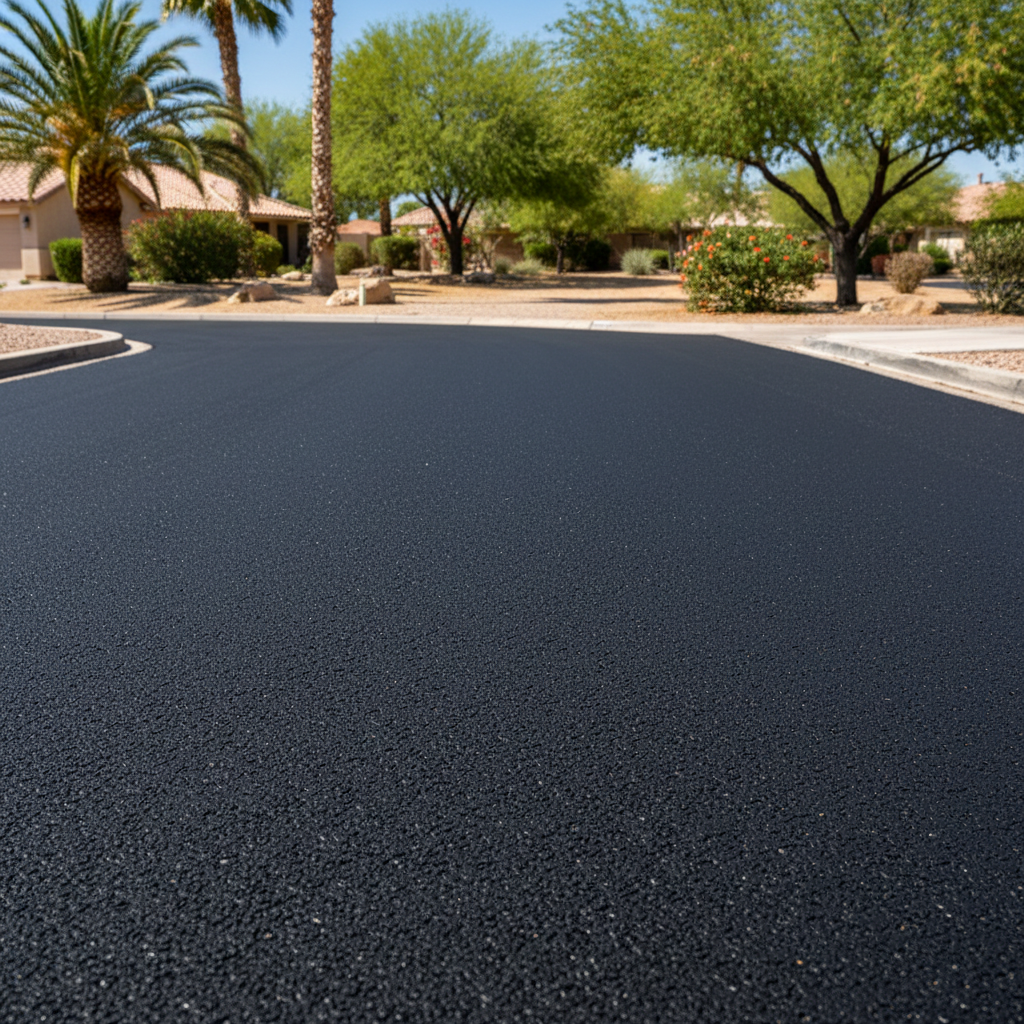
Alright, let's talk commercial asphalt. Now, I know what some of you might be thinking: "Commercial? I'm just a homeowner!" But here's the real deal, Phoenix. Lots of folks around here, especially those in communities with private streets, HOAs, or even just really big properties that share access, often end up dealing with what's technically called commercial-grade asphalt. It's not just for the big box stores, you know? So, if you've got a parking lot, a private road, or even a substantial shared driveway, this information is definitely for you. I've been doing this a long time with Omega Paving, and believe me, I've heard pretty much every question under the scorching Arizona sun. Let's clear some things up, shall we?
How long does commercial asphalt *really* last in Phoenix?
This is probably the very first thing everyone asks, and it's a smart question, especially considering our brutal heat. In Phoenix, commercial asphalt usually lasts anywhere from 12 to 18 years. Sometimes, with truly top-notch maintenance, it can even stretch to 20 or 25 years. Now, that's a bit shorter than what you'd see in cooler climates, where it might easily last 15-20 years. Why the difference? Our intense sun, high UV exposure, and those wild temperature swings between day and night really beat it up. That heat softens the asphalt, making it more prone to ruts and marks from heavy vehicles. Plus, UV rays break down the binder, making it brittle and crack-prone. So, while it's tough stuff, our desert environment is a real challenge for pavement.
Is asphalt better than concrete for commercial lots in our desert climate?
This is a classic debate, isn't it? For commercial applications right here in Phoenix, both have their good points and, well, their not-so-good points. Asphalt is flexible, meaning it can expand and contract with our temperature changes without cracking as easily as concrete. It's also generally faster to install—sometimes just a day or two for a big job, which really cuts down on disruption. And hey, it tends to cost less upfront. On the other hand, concrete is known for its durability and can last 25-30 years or more, definitely outlasting asphalt. It handles heavy loads better and doesn't soften in the heat like asphalt can. But here's the flip side: concrete costs more initially and takes longer to cure. For high-traffic areas, like loading docks or dumpster pads, concrete might be the better long-term bet. But for general parking and access roads, asphalt is often a great, cost-effective choice, especially if you keep up with the maintenance.
What's the right thickness for commercial asphalt here in Phoenix?
You can't just slap down a couple of inches and call it a day, especially for commercial use. The thickness depends entirely on the kind of traffic it's going to see. For a typical commercial parking lot, you're usually looking at 3 to 4 inches of asphalt. If it's a lighter-use lot, 3 inches might cut it. But for areas with heavy traffic, like delivery trucks or lots with a lot of turning movements, 4 inches or even 5 to 7 inches in critical spots is what you'll need. This isn't just about the top layer, either. The base underneath is absolutely crucial. For industrial work in Phoenix, we typically install 4 to 8 inches of compacted aggregate base, sometimes even thicker for heavy container yards. Get the thickness wrong, and you'll be dealing with cracks and damage way too soon. Trust me on that one.
How much does commercial asphalt paving cost in Phoenix?
This isn't a simple answer, because every job is different. But generally, commercial asphalt paving in Phoenix can run anywhere from $4 to $10 per square foot. New installations are usually on the higher end, maybe $6-$10 per square foot, because that includes excavation and base work. If you're just doing an overlay, where we put a new layer over existing, structurally sound asphalt, it could be $3-$6 per square foot. Full replacement, which means tearing out the old stuff and putting in new, might be $7-$12 per square foot. Factors like the project's size (larger jobs can sometimes get a lower per-square-foot rate), how much prep work the site needs, the thickness, the type of asphalt mix, and any drainage issues all play a big role in the final price.
What kind of drainage planning is needed for commercial asphalt in Phoenix?
Proper drainage is non-negotiable here. Our monsoon season can dump a lot of rain in a short amount of time, and if that water sits on your asphalt, it's going to cause major problems. Standing water penetrates the asphalt and weakens the sub-base, leading to erosion, cracks, and potholes. We're talking about everything from ensuring the proper slope so water runs off, to installing catch basins, storm drains, and retention areas. Good drainage protects your investment and prevents costly repairs down the line. It's a critical part of the initial design for any commercial paving project.
Do I need permits for commercial asphalt paving in Phoenix?
Yes, you absolutely do. Any significant work on commercial property, especially if it involves grading, drainage, or impacts the public right-of-way, will require permits. The City of Phoenix, and Maricopa County, have specific requirements. You'll likely need plan review and approval for grading and drainage, and the permits themselves will cover the work. This isn't just a formality; it ensures the work meets local codes and standards. A good contractor, like us at Omega Paving, will handle the permit process, but it's important for you to know it's part of the deal. They'll also make sure to notify the city before any construction work within the public right-of-way.
How can I extend the life of my commercial asphalt in Phoenix?
Maintenance, maintenance, maintenance. Seriously, it's the key, especially with our climate. Regular sealcoating is huge here. It protects the asphalt from UV rays, oxidation, and water penetration. I recommend sealcoating new asphalt about six months after installation, and then every two to three years after that. Promptly repairing any cracks is also critical. Water getting into cracks is the enemy, so crack sealing stops that from happening and prevents bigger problems like potholes. Good drainage, as we talked about, is also a form of preventative maintenance. Basically, stay on top of the small stuff, and you'll save a ton of money and headaches in the long run.